
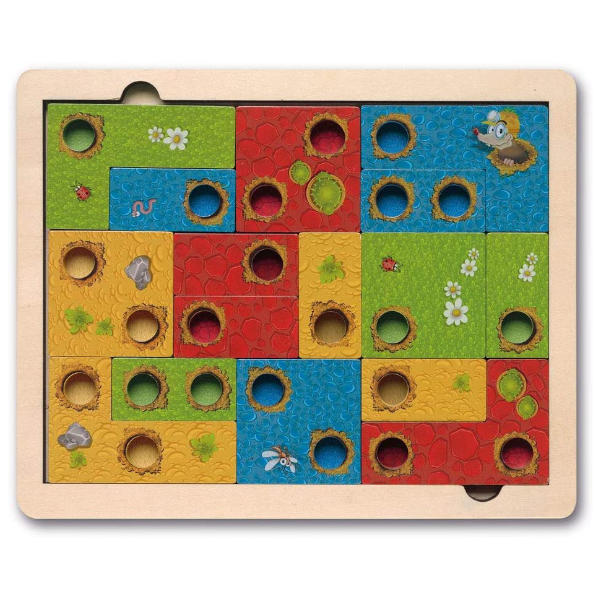
Topo Mole Game is a puzzle that tests your spatial reasoning https://topomole.eu.com/. Players often discuss a method called the “X-Ray Queue.” This isn’t a medical tool. It’s a way to strategically analyze the game board’s hidden layout. This article breaks down that X-Ray Queue method. We’ll explain how it works, where you apply it, and why it’s become an essential tactic for players who want to go beyond guessing.
What Is the X-Ray Queue in Topo Mole Game?
Consider the X-Ray Queue as a structured check-up for your puzzle. Just as an X-ray displays what’s under the surface, this method enables you to spot possible mole locations and tunnel links that aren’t evident at first glance. It’s a mental framework for prioritizing your next moves, converting random clicks into a logical chain of thought. Excelling at this procedure often distinguishes casual players from the experts.
The queue functions on a simple idea: every clue you find restricts what can happen nearby. Your job is to follow these limits and address them in a smart order. By working through this priority list, you rule out dead ends and zero in on the most likely spots for tunnels and moles. The puzzle evolves from a mystery into a series of logical steps you can work through.
Perks of Mastering This Analytical Approach
Mastering the X-Ray Queue goes beyond improving your wins games. It develops a structured way of thinking that you can apply to different logic problems. Users discover the game more fulfilling and more enjoyable, because each step forward stems from their own expertise, not luck.
- Better Consistency:
- Increased Speed:
- Greater Engagement:
Common Diagnostic Problems and Solutions
Even with a strong procedure, you’ll run into usual snags. One is the “fork in the tunnel,” where a path could go two equally likely ways. Another is the “low-information zone,” where clues are few and far between. The X-Ray Queue gives you a strategy for these obstacles so you don’t have to speculate.
- Fork Resolution:
- Information Scarcity:
- Queue Overflow:
The Key Concepts of the Diagnostic Process
This diagnosis technique rests on several core concepts. The first is the principle of adjacency, which controls the relationship between moles and tunnels and the clue numbers on the board. Another is exclusion; after you confirm a square is safe, you rule out options from its surrounding areas. The third principle is step-by-step dependency. The outcome of one step directly influences what you must examine next in your queue.

Sticking to these principles helps your diagnosis proceed smoothly. As an example, a high-value clue in a cramped corner creates an urgent task on your list, because it heavily restricts where tunnels can be placed. Conversely, an isolated clue with a small number can wait until you collect more data from the squares around it. Managing these priorities is the core of the method.
Finding Constraints
The first step is to spot all the active limits on the board. Consider the clue numbers, the board boundaries, and any tunnel segments you have already found. Each is a part of the larger puzzle, defining where tunnels cannot go and where they are required to run.
Probability Mapping
Then, you construct a mental map of likelihoods. You order spaces by how probable it is they contain a piece of a mole tunnel. This map is not static. It shifts every time you process an item within your X-Ray Queue, getting more precise until certain squares become definite.
Detailed Running of the X-Ray Queue
Using the X-Ray Queue involves following a simple cycle: observe, think, and verify. Users condition themselves to follow this flow and avoid pressing squares without a reason. The procedure adopts the natural strategies of top players and turns them into a system you can master.
- Starting Board Scan:
- Queue Creation:
- Task Execution:
- Board and Queue Update:
- Repeating Loop:
Advanced Techniques Incorporated into the Queue
Skilled players fold more complex methods into the basic X-Ray Queue. These are not distinct strategies. They are specific routines that insert into your diagnostic list when the board requires them. They help solve tougher puzzles without wasting time.
One is “edge logic,” a careful study of how tunnels can run along the board’s border. When your queue takes you to an edge, this routine activates, providing deductions that go beyond the standard rules. Another is “closed region analysis.” It checks if an isolated block of squares could even contain a valid tunnel setup considering the clues around it.
Pattern-Based Deduction
Some number patterns possess only one possible solution. A line of ‘2’ clues in a row, for instance, dictates a specific tunnel shape. Recognizing these patterns lets your diagnostic queue bypass several small steps and fill in confirmed information right away.
Assumption Testing
For those infrequent, truly ambiguous spots, the queue might contain a bit of hypothesis testing. You temporarily presume a state for one tricky square, then run the diagnostic queue forward. If you encounter a logical contradiction, your assumption was wrong, so the opposite must be true. You then refresh your queue with this proven fact.

Common Questions on the X-Ray Queue Procedure
Is the X-Ray Queue an authorized game feature?
Can beginners use this procedure effectively?
Does this procedure guarantee a win every time?
How does this differ from simple pattern memorization?
The X-Ray Queue diagnostic procedure turns Topo Mole Game into a series of logical problems to solve in order. By managing the puzzle with this priority list, players swap trial-and-error for careful analysis. This approach boosts your results and makes the game itself more satisfying. It shows that a well-made logic https://www.wikidata.org/wiki/Q16986574 puzzle can offer real strategic depth.